
Sometimes what we need most is not to push forward harder, but to pause intentionally.
Stress is part of life. In the right circumstances it's an extraordinary survival system, helping us respond quickly when we're faced with challenge.
The difficulty isn't stress itself. It's that modern life rarely gives us enough opportunity to recover between one demand and the next.
Often it isn't one dramatic event that leaves us exhausted, but the quiet accumulation of dozens of smaller ones.
Our bodies respond remarkably similarly whether the challenge is physical, emotional or even imagined. Preparing for an important presentation may activate many of the same biological pathways as responding to a genuine physical threat. Those systems are brilliantly designed for short-term survival. The question researchers have increasingly asked is what happens when they remain activated for weeks, months or years.
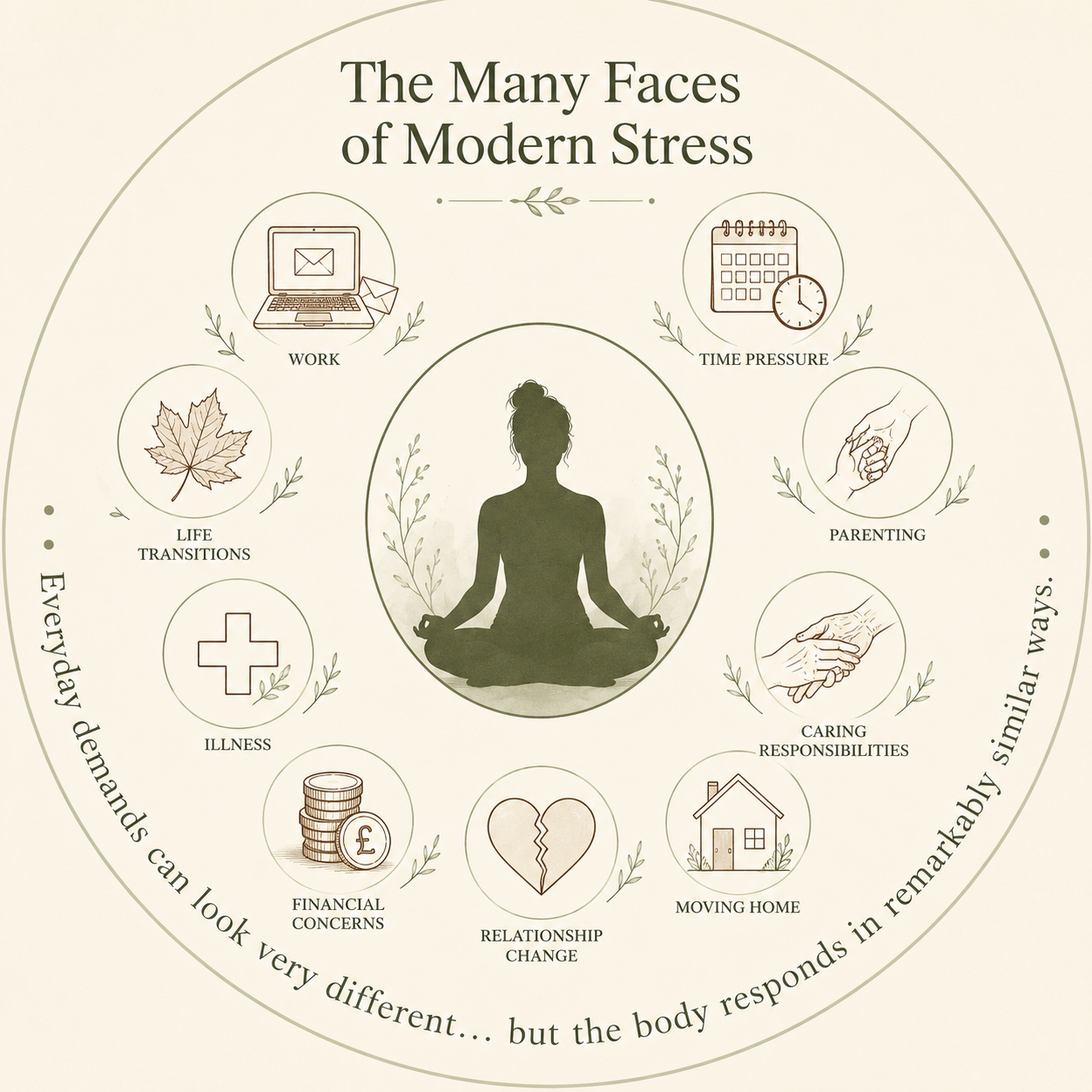
Today, the science of stress is one of the best understood areas of human physiology. We know that prolonged activation of the body's stress response can influence sleep, immune function, cardiovascular health, emotional wellbeing and cognitive performance.
If recovery after stress is not simply a pleasant feeling but an essential part of maintaining a healthy body and mind, then creating opportunities to intentionally pause may be far more important than many of us realise.
So What Happens Inside the Body?
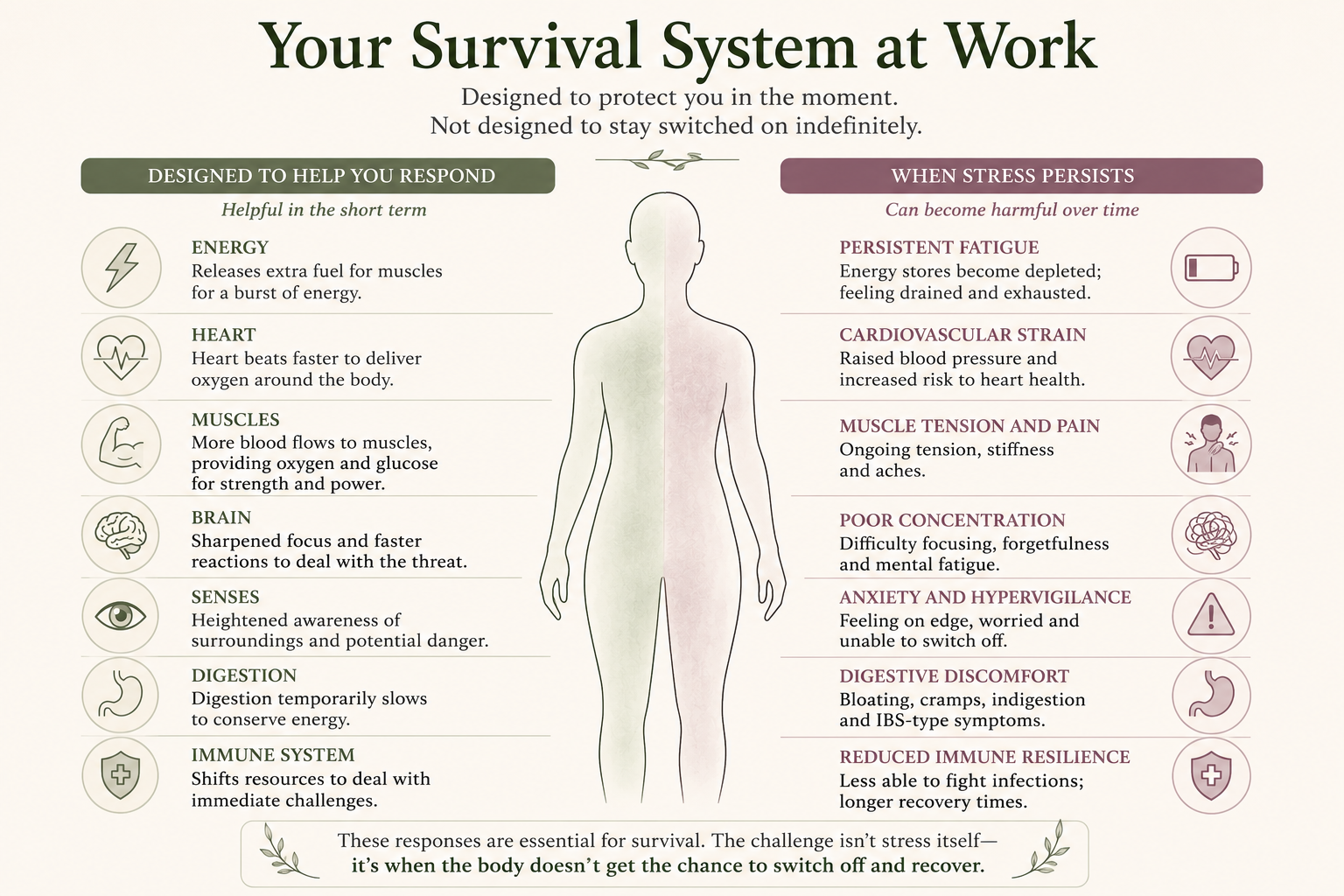
Whether the trigger is physical or emotional, real or anticipated, the brain quickly assesses the situation and activates the autonomic nervous system. This system quietly regulates many of the functions we rarely think about, including heart rate, breathing, blood pressure and digestion.
One branch, the sympathetic nervous system, prepares us for action. Often referred to as the "fight or flight" response, it increases heart rate, sharpens attention and triggers the release of stress hormones such as adrenaline and cortisol. These changes help us react quickly and effectively when faced with challenge.
This response is both normal and necessary, in fact, we just couldn't function without it!
Problems arise when the body spends more time preparing for the next challenge than recovering from the last.
Fortunately, the autonomic nervous system has another branch: the parasympathetic nervous system. Sometimes described as the "rest and digest" response, it helps slow the heart rate, supports digestion, encourages tissue repair and creates conditions in which our bodies can recover.
Rather than acting like an on/off switch, these two systems work together continuously, adjusting our bodies to meet the demands of the moment.
“Balanced living isn't about eliminating stress altogether, it's about having the flexibility to move between stressful, active periods and periods of recovery and calm.”
Life can make that return to calm surprisingly difficult. Periods of genuine rest become scarce so the body may remain in a heightened state of alertness for longer than it was designed to. Over time, this ongoing activation of the ‘fight or flight’ response can place additional strain on multiple body systems.
This doesn't mean stress inevitably leads to illness as our bodies are remarkably adaptable. It does, however, remind us that granting ourselves space and time to return to our individual calm baseline isn't simply a reward for working hard, it's an essential part of staying well.
This understanding has transformed the way we think about wellbeing. Rather than only focusing on treating disease, increasing attention is being given to practices that help people regulate their own physiological state and support the body's own capacity for rest, repair and resilience.
That naturally leads to another question.
If creating opportunities for recovery is important, what kinds of experiences help people access that calmer state?
This is where practices such as mindfulness, breathing exercises, time in nature, massage and Reiki begin to enter the conversation.
If stress prepares us for action, recovery prepares us to heal.
Although we often think of recovery as "doing nothing", it is actually an active biological process. When the mind and body step out of constant alertness the heart rate slows, breathing becomes more regular and biological systems are directed again towards repair, digestion, immune function and emotional regulation.
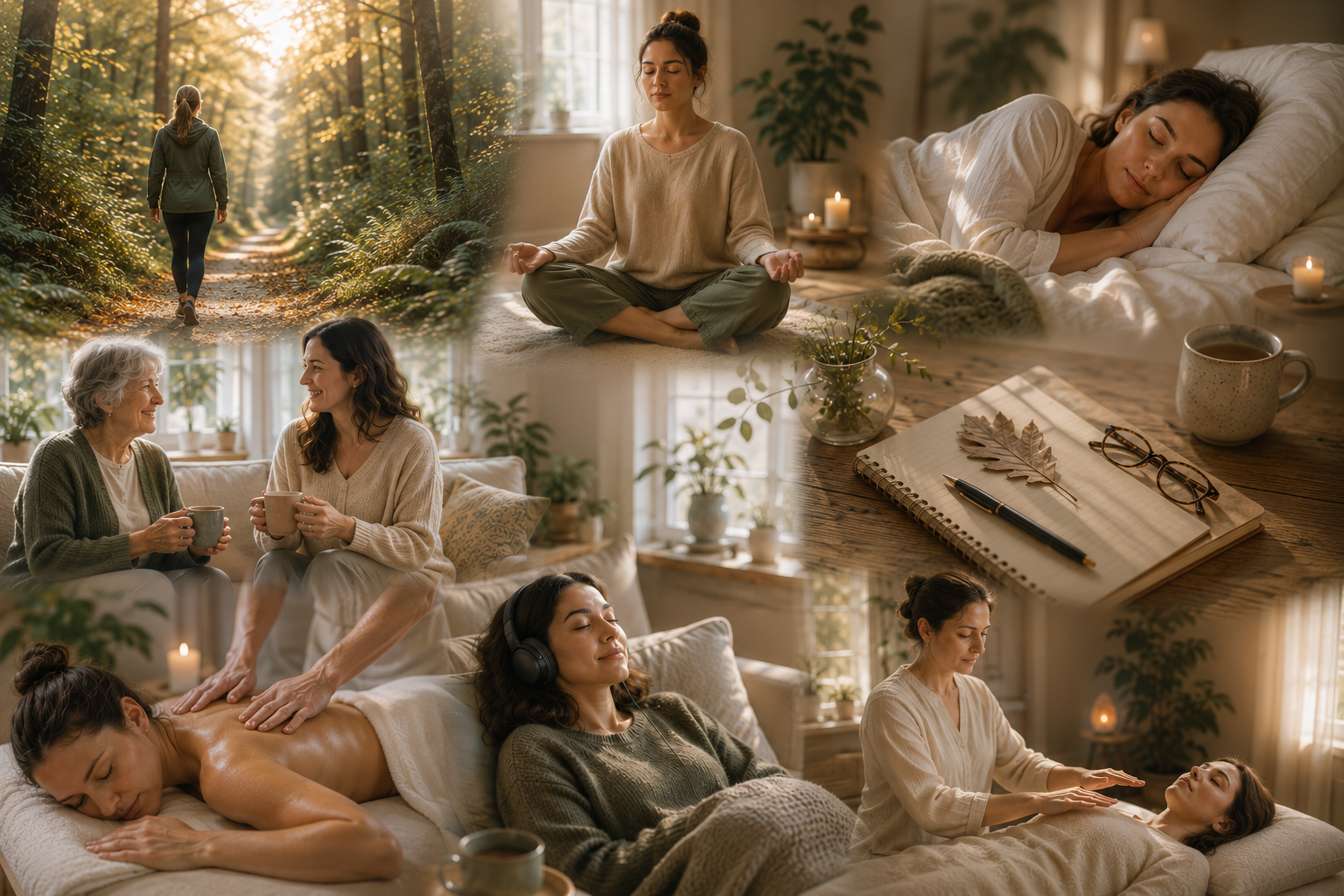
Recovery looks different for everyone. Whether it's a walk in nature, a meaningful conversation, quiet reflection or Reiki, what matters is creating regular opportunities for the body and mind to step out of constant alertness and return to a calmer state.
A Moment to Reflect
Many of us are good at recognising when we're busy. We notice the full diary, the interrupted sleep, the constant notifications and the feeling that there is always one more thing to do, our constantly busy mind.
What we often fail to notice is the absence of genuine pause.
Not scrolling through a phone. Not collapsing in front of the television after an exhausting day with a glass of wine. But moments where the body and mind are given permission to settle without another demand immediately taking their place.
For some people, that pause might be found on a woodland walk. For others it may come through meditation, reading, gardening, conversation with a friend or simply sitting quietly and breathing.
Reiki can simply be understood as another way some people intentionally create space for recovery.
Whatever form it takes, recovery is unlikely to happen by accident. Like exercise, healthy eating or good sleep, it often benefits from becoming a conscious part of how we care for ourselves.
Although researchers are still working to understand exactly how Reiki produces its effects, many people describe the experience as deeply relaxing. Clinical studies have reported improvements in perceived stress, anxiety and wellbeing following Reiki sessions, although the quality of evidence varies and further high-quality research is needed to understand the mechanisms involved.
Perhaps this is where its greatest value lies, in providing a dedicated space where the nervous system has permission to soften, attention can turn inwards and recovery can begin.
Renewal rarely arrives when we're rushing. It often begins with a pause.
Where Reiki May Fit
If you've read this far, one thing has probably become clear: our bodies are remarkably well designed to respond to life's challenges. The question isn't whether stress is good or bad. It's whether we create enough opportunities to recover.
At Autumn Renewal, Reiki is offered in that spirit.
I don't see Reiki as a cure-all, nor as a replacement for conventional healthcare. Instead, I see it as one of several ways people may choose to step away from the demands of everyday life and intentionally create space for rest, reflection and recovery.
Many clients describe feeling calmer, lighter or more settled after a treatment. Some leave with a renewed sense of clarity. Others simply appreciate having time in a space where nothing is expected of them. Every experience is different, and there is no expectation that everyone will respond in the same way.
While researchers continue to explore exactly how Reiki may influence the body and mind, what seems beyond question is the value of creating regular opportunities to pause. Whether that pause comes through nature, meditation, conversation, massage or Reiki itself, making recovery a priority is an investment in long-term wellbeing.
If Reiki feels like something you'd like to explore, you're warmly invited to begin wherever feels right for you.
Whether that's a single treatment to experience Reiki for the first time, a series of sessions as part of a longer journey, or simply taking a little time to learn more, there is no pressure and no expectation.
Sometimes the smallest pause can become the beginning of something much bigger.
Welcome to Autumn Renewal.
New to Reiki?
The Pause A gentle introduction to Reiki, combining an initial consultation with a full treatment and time to reflect on your experience.
The Renewal For those who wish to make regular recovery part of their wellbeing routine.
Looking After Your Employees?
Pause & Restore Workplace Reiki sessions designed to bring moments of calm into busy working lives.