
Could Mitochondria Help Explain How Reiki Works?
I was driving home recently listening to a fascinating interview with Dr Martin Picard, often referred to as The Mitochondria Doctor, when one statement stopped me in my tracks:
"We are energy. We literally are the energy that's flowing through the body."
It immediately made me wonder whether understanding mitochondria could help explain how Reiki works.
Could Mitochondria Be One Missing Piece of the Reiki Puzzle?
When most people hear the word mitochondria, they think back to school biology lessons and remember only one thing: they produce energy. That's true, but it's only part of the story.
Over the past twenty years scientists have discovered that mitochondria are among the most remarkable structures in the human body. They don't simply generate the energy needed to keep us alive. They can communicate, sense their environment, regulate inflammation, influence the immune system and even emit tiny particles of light.¹⁶
These discoveries are changing how researchers think about health. We now know that poor diet, chronic stress and many other factors can reduce mitochondrial efficiency. Mitochondria play such a central role that their impaired function can disrupt many of the body's normal processes and contribute to the development of disease.¹
For those interested in Reiki and other biofield therapies, they also raise an intriguing question: Could mitochondria help explain some of the biological effects reported following Reiki treatments?
At present, nobody knows. There is no published evidence showing that Reiki directly changes mitochondrial function. However, several independent areas of scientific research have begun to overlap in ways that make the question worth investigating.
This article explores those areas, separating established science from emerging hypotheses.
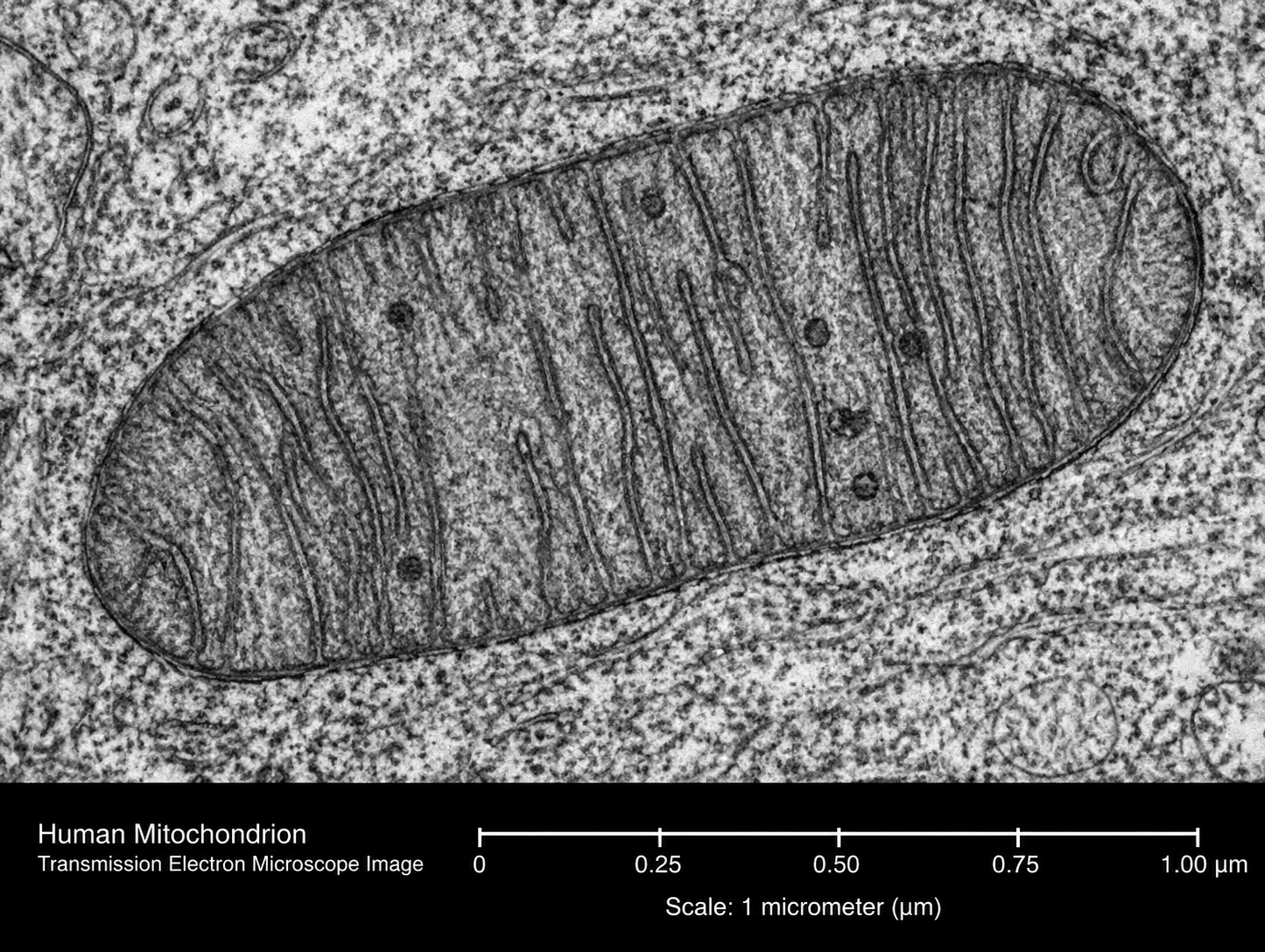
Every Cell Contains Thousands of Tiny Electrical Engines
Each of the approximately 30 trillion cells in our body needs a constant supply of energy. That energy is produced by mitochondria. Depending on the type of cell, there may be only a handful of mitochondria or several thousand. Heart muscle, brain cells and skeletal muscle contain particularly large numbers because they require enormous amounts of energy to function continuously.¹
Each mitochondrion acts like a tiny power station.
It takes the oxygen we breathe and combines it with the food we eat to produce energy. As nutrients are broken down, they release electrons. These electrons flow through a series of specialised proteins inside each mitochondrion, rather like electricity flowing through an electrical circuit.¹
As the electrons move, they create an electrical charge across the inner mitochondrial membrane (typically around −150 to −180 millivolts). This process, known as oxidative phosphorylation, allows the mitochondrion to manufacture ATP, the molecule that powers almost every activity in each of the 30 trillion cells in our bodies.¹
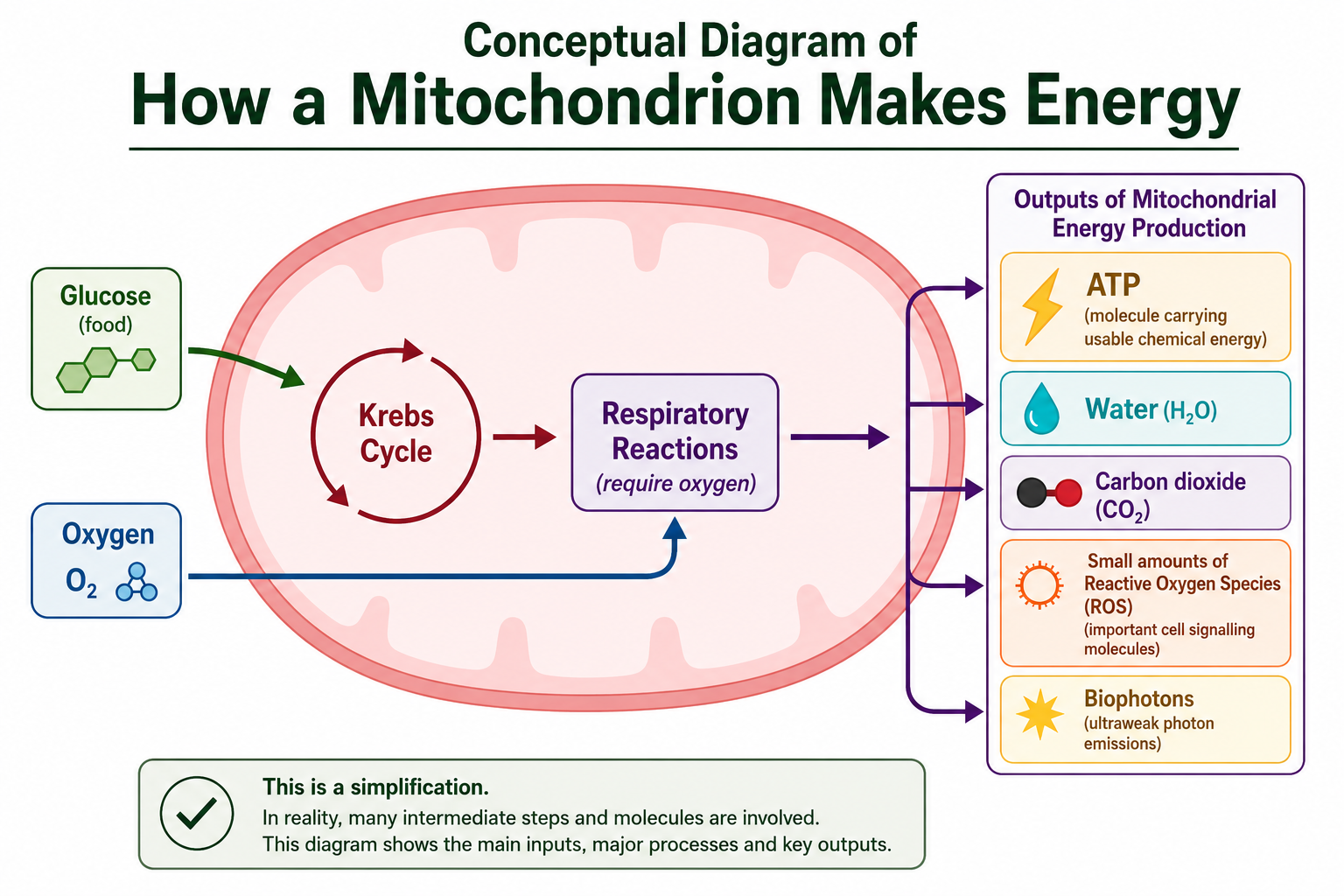
Mitochondria Are Constantly Communicating
Scientists also recognise mitochondria as sophisticated signalling centres. They help regulate inflammation, calcium signalling, immune responses, programmed cell death (apoptosis), stem cell behaviour, gene expression and tissue repair.¹
Mitochondria also produce tiny amounts of molecules called reactive oxygen species (ROS). In healthy amounts they help cells communicate and repair themselves; however, when too much ROS is produced, it can damage cells instead.²
So rather than behaving like passive batteries, mitochondria are constantly sensing what's happening inside the cell and adjusting their activity to meet its changing needs, continuously balancing energy production with cellular communication.¹ ²
Our Cells Can Produce Light!
One of the most fascinating discoveries in modern biophysics is that living cells emit tiny quantities of light!⁶
As mitochondria produce energy for the cell they naturally release tiny particles of light as a by-product of their normal activity. These tiny flashes of light are known as biophotons (or ultraweak photon emissions). They are millions of times too faint for us to see with the naked eye, but modern scientific instruments can detect them.⁶
Interestingly, scientists have found that the amount and pattern of biophoton emission can change when cells are under stress or affected by disease. This has led researchers to investigate whether understanding and quantifying biophotons could one day provide a useful way of assessing cellular health.⁶
Some researchers have proposed that biophotons may also play a role in cellular communication. This remains an area of active research rather than established scientific consensus.⁷
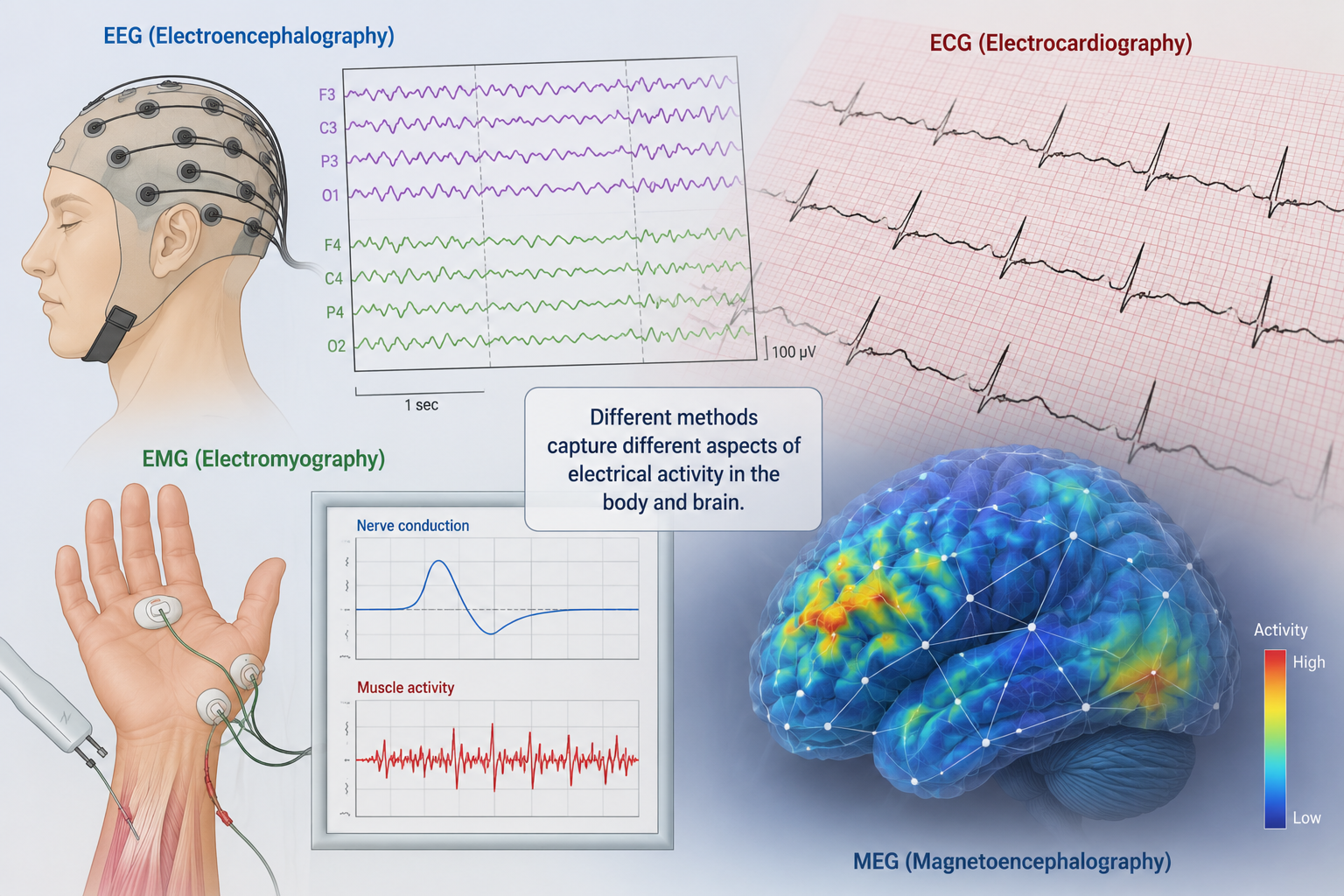
Your Body Is an Electrical Organism
The idea that the body generates electrical activity is not controversial. Standard clinical practice relies on it every day, measuring electrical activity in the heart, brain and muscles because our tissues naturally generate electrical signals that help regulate their normal function.⁵
For example:
An ECG measures the electrical activity of the heart.
An EEG records electrical activity in the brain.
An EMG measures electrical signals in muscles.
Magnetoencephalography (MEG) measures tiny magnetic fields generated by the brain.
These technologies are based on a simple fact: living tissues naturally generate measurable electrical and magnetic fields.⁵
So Could External Electromagnetic Signals Influence Cells?
The answer is yes!
Scientists have discovered that mitochondria respond to certain wavelengths of light by increasing energy production and activating natural repair processes.³ This shows that these tiny powerhouses can respond to external forms of energy under the right conditions.
Several established medical therapies deliberately use electromagnetic energy to influence living tissue.³
These include:
Red-light therapy (photobiomodulation) – used to help wounds heal, reduce inflammation and relieve joint or muscle pain.
Near-infrared therapy – used to support recovery from muscle injuries and improve tissue healing after exercise or injury.
Pulsed electromagnetic field (PEMF) therapy – used to help relieve chronic pain and support the healing of some bone and soft tissue injuries.
Transcranial magnetic stimulation (TMS) – used to treat depression when other treatments have not been effective.
Bone growth stimulators – used to encourage the healing of broken bones that are slow to mend.
This demonstrates an important principle. Living cells can respond to externally applied electromagnetic energy under the right conditions.³
But it does not demonstrate that Reiki works through the same mechanism.
Where Reiki Enters the Picture
This is where established science ends and scientific hypothesis begins!
Several recent reviews have proposed that biofield therapies such as Reiki may involve interactions between the body's own electromagnetic fields, connective tissues, water surrounding our cells and biophotons.⁴
Rather than viewing these as separate systems, researchers have suggested they may work together as part of an integrated communication network throughout the body.⁴
Although several recently reported clinical studies have investigated the biological effects of biofield therapies by measuring physiological and cellular responses, no published studies have yet demonstrated that Reiki directly alters recognised markers of mitochondrial function.
The encouraging news is that the tools needed to investigate these questions are already available. Modern laboratories can measure aspects of mitochondrial function, including ATP production, membrane potential, reactive oxygen species, gene expression and even biophotons. Combining these techniques with well-designed, controlled clinical studies could provide valuable insights into whether mitochondria play a role in the biological effects reported by some recipients.
In Conclusion
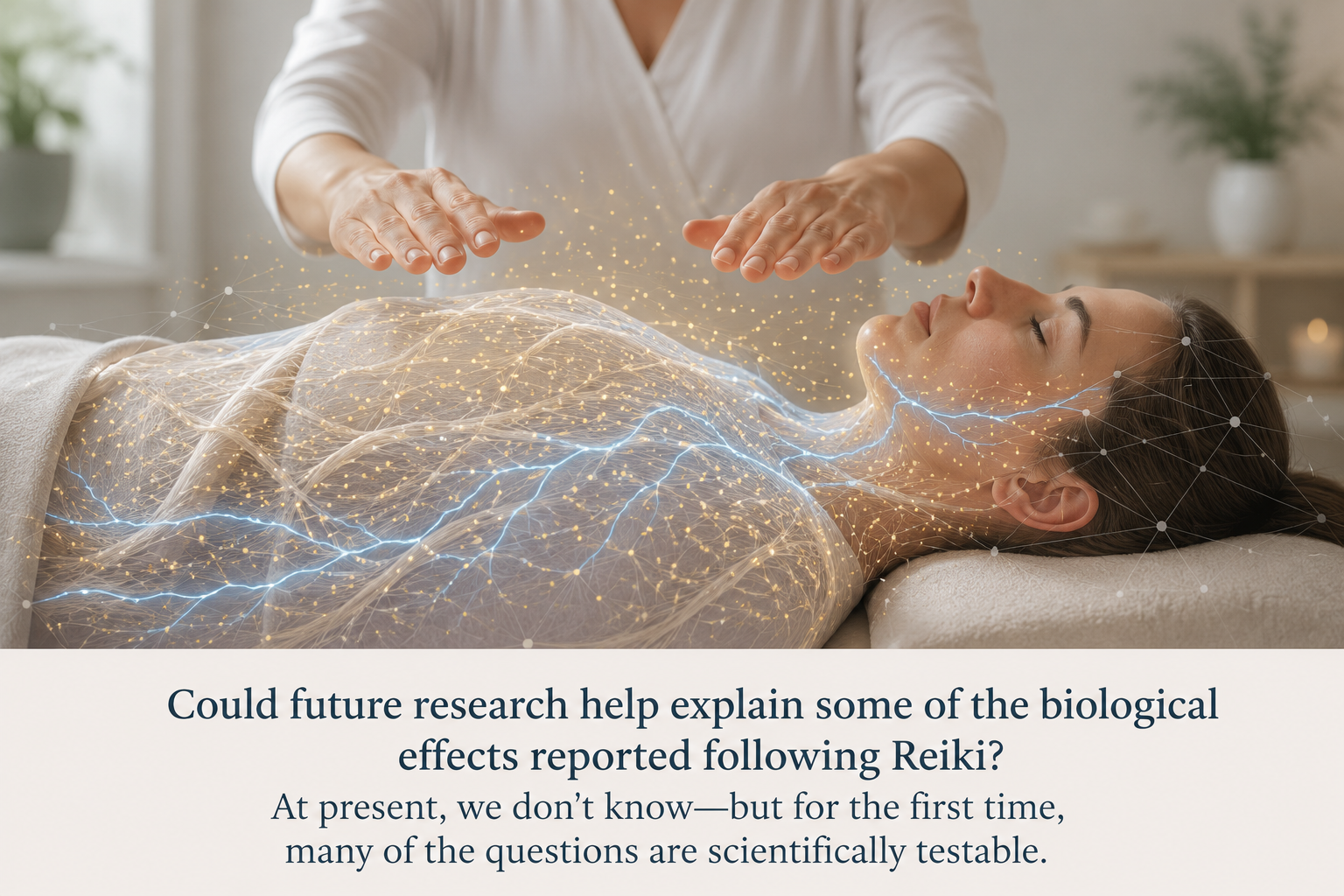
Whether the answer ultimately proves to be yes, no or something more complex, the question is now scientifically testable. That marks an important step towards our understanding of how subtle biological interactions arising from biofield therapies such as Reiki may influence health and wellbeing.
References used to gather information for this piece
(1) Mitochondrial Signal Transduction
Picard M, Shirihai OS. Cell Metab. 2022;34(11):1620-1653. doi: 10.1016/j.cmet.2022.10.008 PMID: 36323233 PMCID: PMC9692202
(2) How Mitochondria Produce Reactive Oxygen Species
Murphy MP. Biochem J. 2009;417(1):1–13. doi: 10.1042/BJ20081386 PMID: 19061483 PMCID: PMC2605959
(3)Proposed Mechanisms of Photobiomodulation or Low-Level Light Therapy
de Freitas LF, Hamblin MR. IEEE Journal of Selected Topics in Quantum Electronics. 2016;22(3):348–364. DOI: 10.1109/JSTQE.2016.2561201 PMID: 28070154 PMCID: PMC5215870
(4) Human Biofield Components Explained: A Tensegrity-Based Biophysical Framework for Energy Medicine.
Sá, Rick. International Journal of Complementary and Alternative Medicine. 10.15406/ijcam.2025.18.00731. doi:10.15406/ijcam.2025.18.00731.
(5) Controlling Cell Behavior Electrically: Current Views and Future Potential
Mccaig, Colin & Rajnicek, Ann & Song, Bing & Zhao, Min. (2005). Nature Reviews Molecular Cell Biology. 2005;6(1):36–46. doi: 10.1038/nrm1528 PMID: 15688066
Cifra M, Pospíšil P. Journal of Photochemistry and Photobiology B: Biology. 2014;139:2–10. DOI: 10.1016/j.jphotobiol.2014.02.009 PMID: 24726298
(7) Cell-to-Cell Signalling Through Light: Just a Ghost of Chance?
Kučera O, Cifra M. Cell Communication and Signaling. 2013;11:87. doi: 10.1186/1478-811X-11-87